Water, explained plainly.
What can be in the water your family drinks, how to store it well and what options you have to treat it.
In more than 3 in 4 households studied, the water had faecal contamination.
2024 study of 111 households in northern Colombia.
What can be in your water
- Soil and sand
- The part you can see. It makes water cloudy and can hide germs.
- Bacteria and other germs
- They come from traces of human or animal faeces. You cannot see or smell them, and they can cause diarrhoea and other stomach illness.
- Pesticides and chemicals
- From farming, industry or pipes. Some taste bad; others go unnoticed.
- Heavy metals
- They can come from the soil, from mining or from old pipes. You cannot see or taste them.
That is why clear water is not always safe water.
Store it well at home
Clean water can get dirty again in the bucket or the tank. A few simple habits help:
- Use a clean container and keep it covered.
- Take water out through a tap or by pouring, never by dipping cups or hands.
- Wash the container often.
- Do not mix treated water with untreated water.
Ways to treat it
Each option solves part of the problem. None is quite like another.
- Boiling
- Kills germs, but does not remove chemicals, metals or soil. It uses gas or firewood every day.
- Bottled water or water jugs
- Depends on who fills it and how clean the jug is. It is a cost every week.
- Chlorine
- Kills many germs at the right dose, but does not remove chemicals or metals.
- Filters
- There are many kinds. What matters is what they hold back and how they were tested.
How the Openversum filter handles it
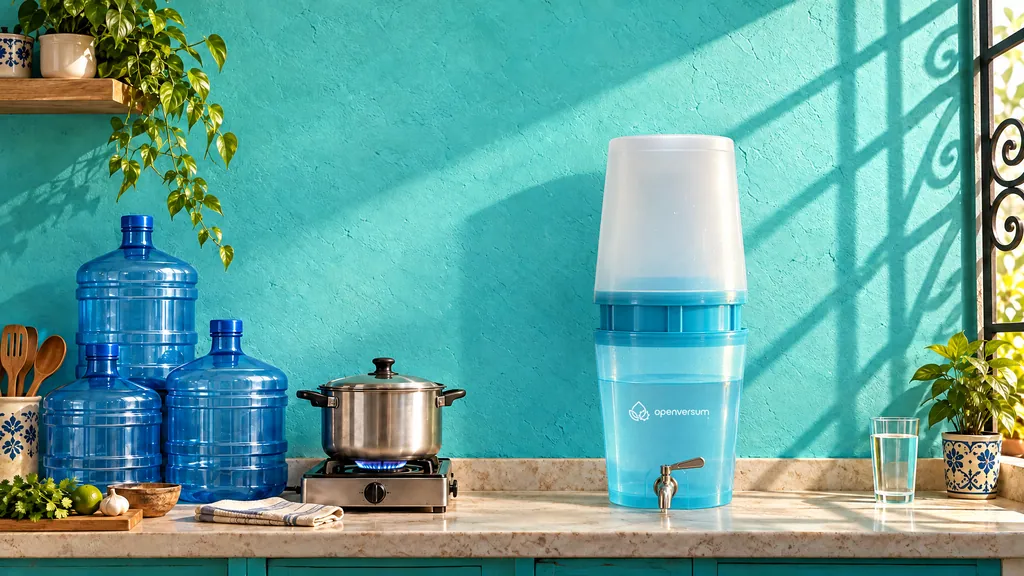
It works without electricity: you fill the tank and the water runs down on its own, layer by layer.
- The dirt you can see
- A washable cloth pre-filter holds back soil and sand.
- Pesticides and chemicals
- Activated carbon holds them back and removes bad taste.
- Heavy metals
- A special granulate holds them back.
- Bacteria
- Tested to the ASTM F838 standard: not a single bacterium got through.